
A phone system, not a phone contract
Most businesses looking at their phones are not chasing a feature. They want calls answered by the right person, they want the same number to ring wherever their team happens to be working, and they want one company to call when something sounds wrong.
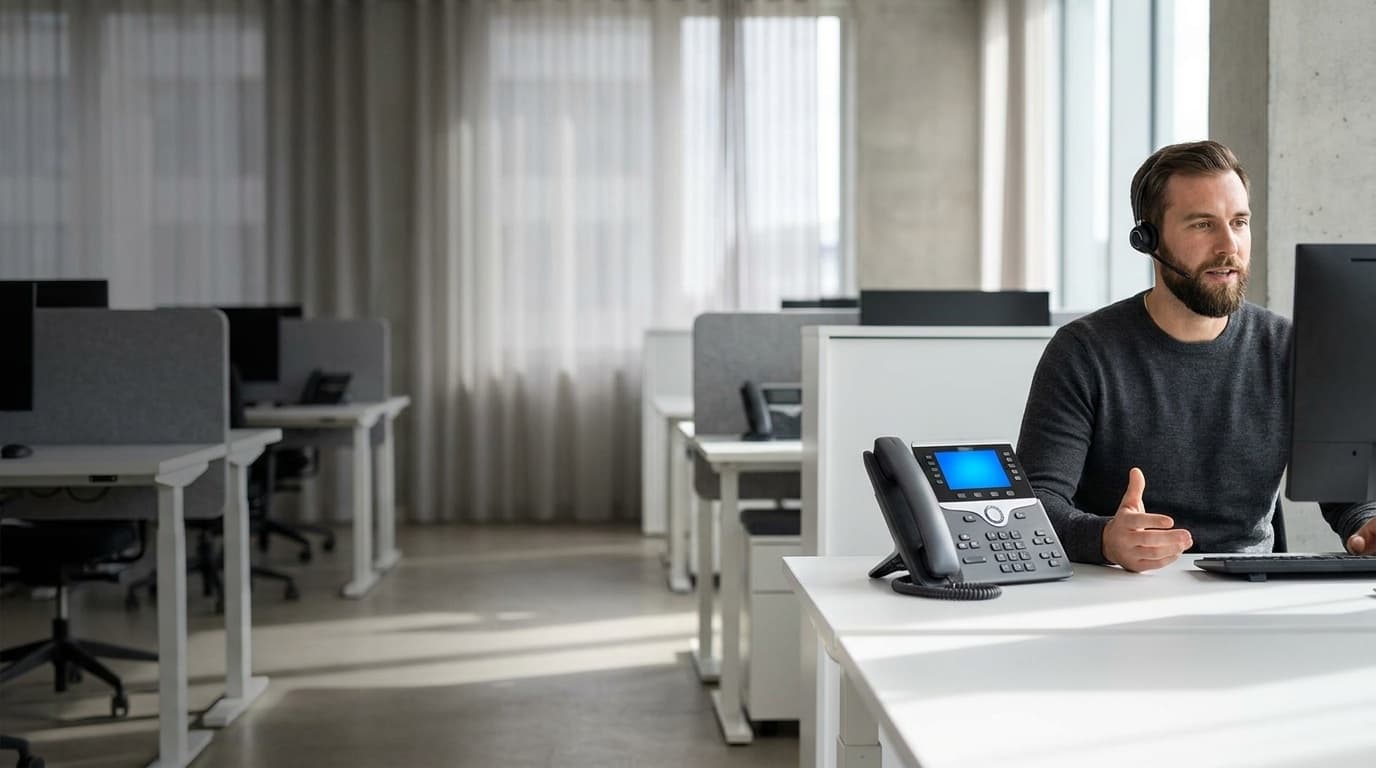
That is what we build. The phone system is hosted in the cloud, so there is no box on the wall to fail and no engineer visit to change how calls are routed. Your team gets a desk phone if they want one and an app on their laptop and mobile if they do not, all ringing on the same number. Calls follow a plan you can actually understand: a menu if you need one, hunt groups so nothing rings out, voicemail that arrives as an email, and out-of-hours handling that changes itself rather than needing someone to remember.
We also supply and monitor the connection underneath it, which is the part that decides whether the whole thing sounds excellent or awful. Because the line and the calls both come from us, there is nobody to blame but us.
The old phone network is being switched off
Traditional analogue and ISDN lines are being retired nationally on 31 January 2027, and Openreach have confirmed there will be no further extension. Every business still on them has to move to internet-based calling before that date.
Doing it deliberately rather than being migrated on somebody else's schedule means you choose the timing, the system and the supplier, and you get to fix the things that were annoying about the old setup at the same time. Businesses that leave it late tend to get a like-for-like swap and none of the benefit.
It is also the moment to check what you are actually paying. Telephony costs are usually spread across a service invoice, line rental, call charges and sometimes a separate finance agreement for the handsets. Added up in one place, the total surprises people in both directions.
Our VoIP service includes:
- Cloud phone system design call flows, menus, hunt groups, voicemail-to-email and out-of-hours routing
- Number porting your existing numbers move across, including DDIs and numbers you have held for decades
- Desk phones and softphone apps take business calls on a handset, a laptop or a mobile, on the same number
- Multi-site and remote routing calls reach the right team whichever office, home or vehicle they are sitting in
- Call recording and reporting where compliance or coaching needs it
- The connection underneath surveyed, sized for your call volume and prioritised for voice traffic
- Failover so calls keep flowing through a line fault rather than stopping with it
- Changes on request a new starter or a different call flow is a phone call, not a change request with a fee
Why bad VoIP is nearly always a bad line
If you have ever been on a call that broke up, echoed or dropped, the phone system almost certainly was not the problem. The connection was.
Voice traffic is unusual: it needs very little bandwidth but it is intolerant of delay, and it competes with everything else on your network. Put twelve simultaneous calls on a line sized for browsing, or on a network that treats a phone call as no more urgent than someone uploading a video, and it will sound exactly as bad as you remember.
So we start with the line rather than the handsets. We work out how many calls actually happen at once, check what is genuinely available at your postcode, look at the switching and cabling inside the building, and prioritise voice ahead of other traffic. Where an outage would stop the business, we put a second line or a 4G failover behind it so calls keep flowing.
How a switchover runs
The part that takes the time is the number port, which is a national process rather than anything a supplier can rush. Everything else happens alongside it.
- 1. Survey. How many calls happen at once, which numbers matter, who needs to answer what, and whether the line and the internal network can carry voice properly.
- 2. Design and quote. Call flows, handsets, licences and any line changes costed as one piece of work, with the term and notice period stated before you sign.
- 3. Build and port. The new system is configured and tested while the old one is still running, handsets arrive pre-provisioned, and the port is submitted for a date you have agreed.
- 4. Cut over out of hours. The old service stays live until the new one has proven itself. There is no morning where nobody can answer the phone.
- 5. Support and change. Training for whoever manages the phones, and a number to ring when you want something moved.
Response times and cover
Phones down is a critical-priority ticket, which carries a contractual 15-minute response guarantee. Helpdesk hours are 08:30 to 17:30, Monday to Friday, excluding public holidays, with 24/7 cover available where an outage outside those hours would genuinely stop the business.
The connection your calls run over sits on continuous monitoring and carries a 99.99% network uptime guarantee, with service credits that apply automatically below it.
What this looks like in practice
A four-branch estate agency running one phone system across every office, and a multi-site hospitality group where calls needed to find the right venue.
Why choose CT1 for VoIP?
- One supplier for the line and the calls, so a quality problem gets fixed rather than argued about
- The connection surveyed and sized before anything is quoted
- Changes made while you are on the phone, not raised as a request
- Local engineers across Canterbury and Kent
Get started today
Send us your current phone bills and we will tell you what you are really paying, what a modern system would cost and whether moving is worth it. If staying put is the sensible answer, we will say so.